Knowledge Base › All In One Ess
Dyness Cygni 10.0HS
Manufacturer documented Global (a separate AU-market manual and datasheet exist) verified Sept. 23, 2026
Unresolved safety-relevant conflict
Two sources give different figures for a value on this product and nobody has resolved it. The specifications below are shown as recorded, but this product must not be treated as verified for engineering purposes until the conflict is closed.
Two sources give different figures for a value on this product and nobody has resolved it. The specifications below are shown as recorded, but this product must not be treated as verified for engineering purposes until the conflict is closed.
Page 1 of Dyness Cygni Series Datasheet EN 2025-10-20 (https://www.dyness.com/Public/Uploads/uploadfile/files/20260415/DynessCygniSeriesDatasheetEN20251020-929.pdf)
Identity
| category | all_in_one_ess |
| ean | — |
| generation | — |
| hardware_revision | — |
| legacy_name | — |
| manufacturer | Dyness |
| market_version | — |
| model | Cygni 10.0HS |
| mpn | — |
| product_family | Dyness Cygni Series |
| product_status | active |
| product_status_evidence | Listed on the dyness.com residential Low Voltage ESS index with a live official product page, fetched 2026-09-02. |
| region | Global (a separate AU-market manual and datasheet exist) |
| release_year | — |
| sku | — |
| subcategory | stacked all-in-one residential ESS - hybrid (PV + battery) inverter plus stackable battery modules |
| variant_note | Four published system variants share one enclosure set and differ in AC output power and coupling: 8.0HS (8000 VA, hybrid), 10.0HS (9999 VA, hybrid), 8.0AS (8000 VA, AC-coupled), 10.0AS (9999 VA, AC-coupled). This record is 'Cygni 10.0HS'. The AU user manual title additionally shows an '-M2/M3/M4' suffix that appears to encode the number of stacked battery modules; that document was located but not fetched. |
Electrical
| ac_nominal_output_power_va | 9999 |
| battery_module_dimensions_mm |
650×300×180
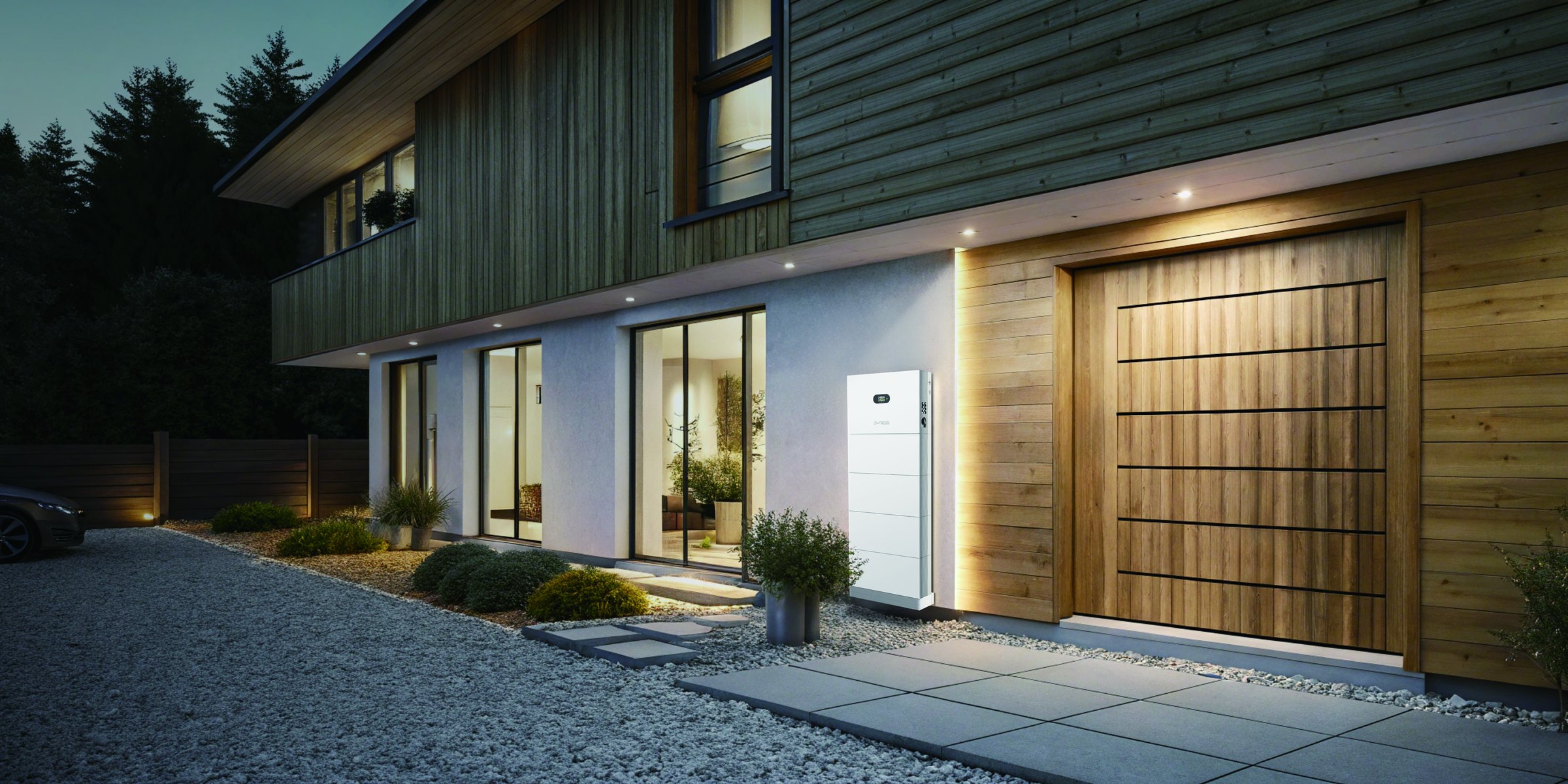
Cygni - All-in-one residential energy system (official product page)
|
| cell_chemistry | — |
| cell_type | — |
| chemistry | LiFePO4 (LFP) |
| continuous_charge_current_a | — |
| continuous_discharge_current_a | — |
| continuous_power_kw | UNKNOWN as a battery DC rating. The published '9999 VA' is the SYSTEM AC nominal output apparent power. |
| cycle_life | >=8000 cycles |
| cycle_life_cycles_min |
8000
Cygni - All-in-one residential energy system (official product page)
|
| depth_of_discharge_pct | — |
| inverter_dimensions_mm |
650×450×180
Cygni - All-in-one residential energy system (official product page)
|
| max_charge_current_a | — |
| max_charge_power_kw | — |
| max_discharge_current_a | — |
| max_discharge_power_kw | — |
| max_parallel_units | — |
| max_series_units | — |
| nominal_capacity_ah | — |
| nominal_energy_kwh | — |
| nominal_voltage_v | — |
| note | SAFETY-CRITICAL DISTINCTION: '9999 VA' is AC apparent OUTPUT power of the inverter unit and is unrelated to the 7.68~46.08 kWh battery ENERGY range. Neither battery DC voltage nor any battery current is published; every such field is UNKNOWN rather than derived. |
| operating_voltage_max_v | — |
| operating_voltage_min_v | — |
| parallel_supported | — |
| peak_charge_current_a | — |
| peak_discharge_current_a | — |
| peak_power_kw | — |
| phase_count | 3 |
| round_trip_efficiency_pct | 94 (battery round-trip, per the Solar Link Australia installer review; not confirmed by Dyness) |
| series_supported | — |
| system_energy_max_kwh | 46.08 (disputed - see data_conflicts) |
| system_energy_min_kwh | 7.68 |
| system_type |
Cygni Hybrid
Cygni - All-in-one residential energy system (official product page)
|
| system_usable_energy_range_kwh |
7.68-46.08
Cygni - All-in-one residential energy system (official product page)
|
| usable_energy_kwh | 7.68~46.08 (system range across the supported number of stacked battery modules) - CONFLICT, see data_conflicts |
Physical / mechanical
| battery_module_weight_kg |
40.5
Cygni - All-in-one residential energy system (official product page)
|
| cooling_method | — |
| depth_mm | 180 (both the inverter unit and each battery module) |
| height_mm | 450 (inverter unit) / 300 (each battery module) - the assembled stack height depends on module count and is not published |
| installation_notes | 'Wiring-free stack design' per the official page marketing copy. |
| inverter_weight_kg |
27.5
Cygni - All-in-one residential energy system (official product page)
|
| ip_rating | IP66 |
| mounting | 19-inch Rack / Wall-mount |
| mounting_type | ['stacked (wiring-free stack design)'] |
| rack_units | — |
| weight_kg | 27.5 (inverter unit) + 40.5 per battery module - no single total system weight is published |
| width_mm | 650 (both the inverter unit and each battery module) |
Installation
| installation_notes | — |
| mounting_orientation | vertical stack |
Environment
| charge_temperature_range_c | — |
| discharge_temperature_range_c | — |
| indoor_outdoor | indoor and outdoor (IP66) |
| max_altitude_m | — |
| operating_humidity | — |
| operating_temperature_max_c | 60 (per the Solar Link Australia installer review; not published by Dyness) |
| operating_temperature_min_c | -20 (per the Solar Link Australia installer review; not published by Dyness) |
| storage_temperature_max_c | — |
| storage_temperature_min_c | — |
Interfaces & connectors
| bluetooth | — |
| can | — |
| communication | CAN, RS485 |
| communication_ports | — |
| dry_contact | — |
| ethernet | — |
| modbus_rtu | — |
| modbus_tcp | — |
| protocol_notes | None published. The Cygni is a closed inverter+battery system, so third-party inverter protocol selection is not applicable in the way it is for the bare battery modules. |
| rs232 | — |
| rs485 | — |
| usb | — |
| wifi | — |
Protection
| fire_suppression | yes - 'Built-in active fire protection system' per the official page |
| heating | — |
| over_current | — |
| over_temperature | — |
| over_voltage | — |
| short_circuit | — |
| under_voltage | — |
Certifications
| confidence | community-verified |
| note | No certification is printed on the official dyness.com Cygni page. AS/NZS 4777.2 is an Australian grid-connection standard and would apply to the AU market version only. |
| safety_certifications | — |
| standards | UNKNOWN from Dyness. The Solar Link Australia installer review cites 'UN38.3, AS/NZS 4777.2, IEC 62040-1' for the AU market. |
| transport_certifications | UN38.3 (community-verified, AU market only) |
Warranty & service
| conditions | — |
| note | No warranty period is published on the official Cygni page or in the fetched third-party source. |
| summary | — |
| warranty_years | 10 |
| years | — |
Documents
datasheet
{# Located but never retrieved: listed, but deliberately not linked, and it
backs no stored value. #}
Dyness Cygni Series Datasheet EN 2025-10-20 — located, not retrieved
rev UNKNOWN
third-party-review
Dyness Cygni All-in-One ESS Review (Solar Link Australia - installer blog)
rev UNKNOWN
user-manual
{# Located but never retrieved: listed, but deliberately not linked, and it
backs no stored value. #}
Cygni Series USER MANUAL - Energy Storage System Cygni8.0HS-M2/M3/M4 (AU) — located, not retrieved
rev UNKNOWN
Recorded conflicts
electrical.battery_module_energy_kwh / system_energy_max_kwh Review required
Battery Usable Energy 7.68~46.08 kWh (system range) — Dyness official Cygni product page specification table, 'Battery Usable Energy (kWh)'
Each battery module 3.84 kWh nominal / 3.45 kWh usable; up to four modules; total 15.36 kWh — Solar Link Australia installer review of the Cygni (AU market)
Additional documented parameters
Recorded verbatim from the source; no schema field exists for these yet.
| 1C Ultra-rapid Charge (marketing copy) | full charge in one hour |
| AC output (Solar Link Australia) | 230V AC, <3% THDi |
| Battery Module Dimensions (WxHxD mm) | 650x300x180 |
| Battery Module Weight (kg) | 40.5 |
| Efficiency (Solar Link Australia) | 97.5% max, 94% battery round-trip |
| Enclosure Type | IP66 |
| Inverter Dimensions (WxHxD mm) | 650x450x180 |
| Inverter Weight (kg) | 27.5 |
| Model suffix in the AU manual title | Cygni8.0HS-M2/M3/M4 |
| Nominal Output Power (VA) | 8000 / 9999 |
| PV input (Solar Link Australia) | Three MPPT trackers, Max 16,000W |
| Standards (Solar Link Australia) | UN38.3, AS/NZS 4777.2, IEC 62040-1 |
| VPP-ready (marketing copy) | quick demand response capability |
| Wiring-free stack design (marketing copy) | stacked modules, no inter-module wiring |
| builder_completeness | partial |
| region_notes | ANMA stores this record's region as free prose (e.g. 'global (EN documentation)'), which is not a region code; normalised to GLOBAL here and reported in identity_review. The product page opened is Dyness's English global site. |